
Profhilo is one of the most frequently misunderstood treatments in modern aesthetics. Clients often arrive at the clinic having read that it’s a “type of filler” — but that description misses the profound biological difference in how it works and what it actually achieves. As someone who has administered hundreds of Profhilo treatments, I want to take you through the real science behind this remarkable product.
What Actually Is Profhilo?
Profhilo is a bio-remodelling injectable — not a filler. Developed by the Italian company IBSA, it contains one of the highest concentrations of pure hyaluronic acid (HA) available in any injectable product: 64mg of HA in just 2ml. But the concentration isn’t the revolutionary part. It’s what type of HA it contains and how it behaves once it enters the skin.
Conventional dermal fillers use cross-linked hyaluronic acid. The cross-linking process essentially “stitches” HA molecules together using a chemical called BDDE, creating a gel that holds its shape and adds volume. This is ideal for adding definition to lips, cheeks or the chin — areas where structural support is needed.
Profhilo uses a patented NAHYCO® technology — a completely different thermal process that bonds both high and low molecular weight HA together without any chemical cross-linking agents. The result behaves entirely differently once injected.
“Profhilo doesn’t fill — it fundamentally transforms the quality and behaviour of your skin from the inside out.”— Victor Amorim, Founder & Lead Practitioner
How It Works in the Skin
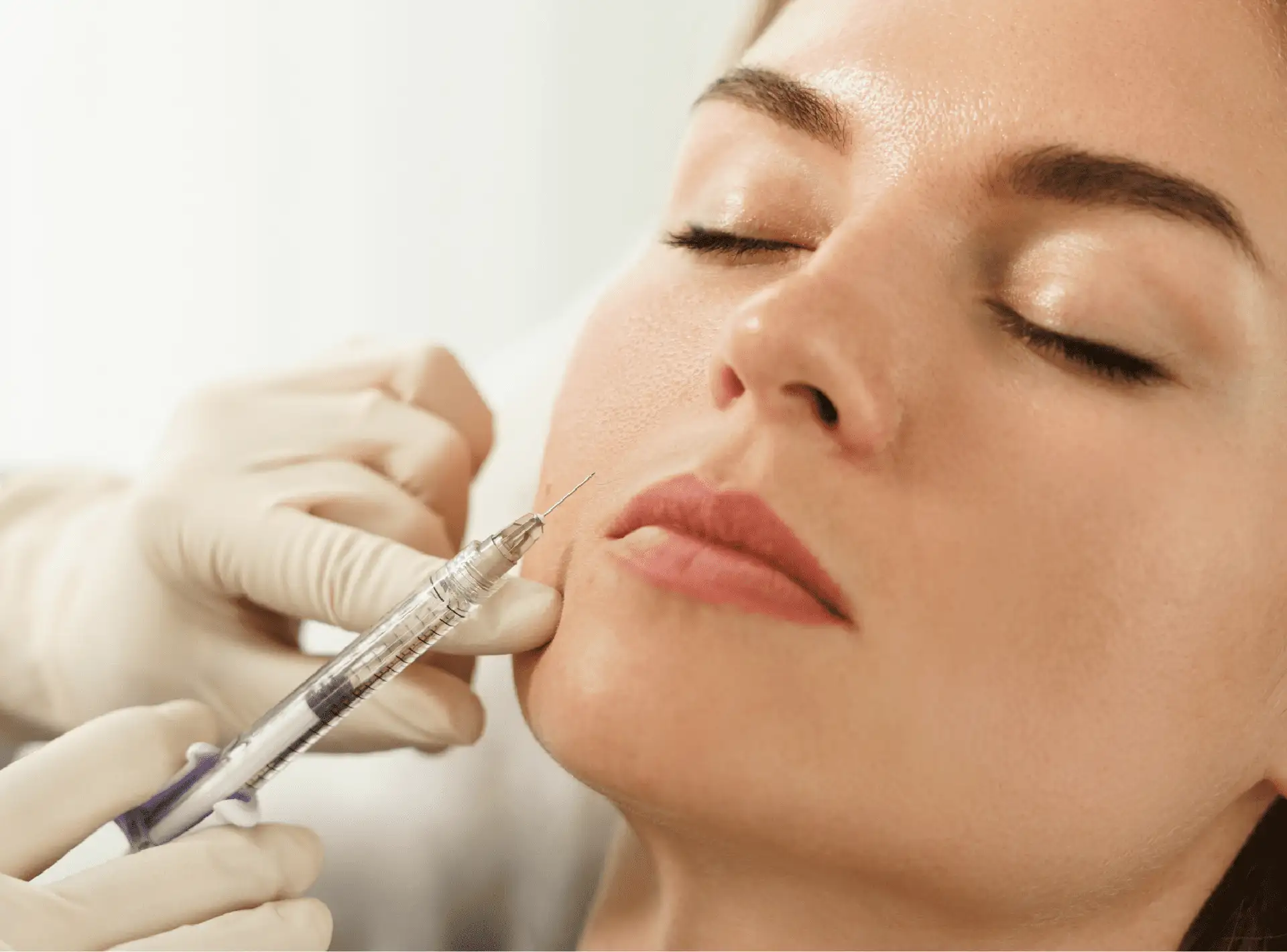
Once injected into the dermis using the patented BAP (Bio Aesthetic Points) technique — five points on each side of the face — Profhilo spreads like a liquid through the skin. Unlike a filler which stays where you place it, Profhilo flows through the tissue, delivering hyaluronic acid broadly and evenly.
This is where the science becomes extraordinary. The high molecular weight HA forms a slow-release reservoir, while the low molecular weight HA is absorbed immediately and begins stimulating cell receptors. Together, they trigger the production of four types of collagen (I, III, IV, VII) and elastin — the proteins responsible for your skin’s firmness, elasticity and structural integrity.
Key Biological Effects of Profhilo
- Stimulates four types of collagen simultaneously — Type I, III, IV and VII
- Triggers elastin production for improved skin elasticity and bounce
- Deeply hydrates the dermis through hyaluronic acid’s water-binding capacity
- Improves skin laxity in areas prone to sagging without adding volume
- Activates adipocyte stem cells to promote fat tissue regeneration
- No BDDE cross-linking — no chemical additives remain in the skin
What Results to Expect
The results from Profhilo are not immediate — and understanding why helps set the right expectations. Because the treatment works by stimulating your body’s own collagen and elastin production, it takes time for those biological processes to unfold. Most clients see initial improvements in skin hydration and quality within two to four weeks of their first session.
The standard protocol is two sessions spaced four weeks apart. By week eight — roughly four weeks after the second session — the full bio-remodelling effect becomes visible. Clients typically notice their skin feels firmer and more elastic, with improved texture, a natural luminosity and visible reduction in skin laxity, particularly around the lower face, neck and décolletage.
Before / After Photography
Results from a course of two Profhilo treatments — individual results vary.
Who Benefits Most?
Profhilo is not primarily an anti-wrinkle treatment — though it does soften fine lines as a secondary effect. It works best for clients who are experiencing skin laxity, dullness, dehydration or a loss of skin quality that hasn’t yet progressed to the point of requiring surgical intervention. It’s particularly effective for the face, neck, décolletage and hands.
I often recommend Profhilo as a foundation treatment — something to optimise overall skin quality before or alongside more targeted treatments like anti-wrinkle injections or dermal fillers. In our Glass Skin and Ultimate Transformation packages, we pair it with Exosome Therapy for an even more comprehensive regenerative result.
Safety and Aftercare
Because Profhilo uses no chemical cross-linking agents, it has an excellent safety profile. The main side effects are transient — minor redness, small bumps at injection points and occasional bruising — all of which typically resolve within 24 to 48 hours.
After your treatment, I advise clients to avoid touching the injection points, strenuous exercise and saunas for 24 hours, and to keep the skin well-hydrated. SPF is essential the following morning. I also recommend avoiding other facial treatments — including facials or peels — for one week after the procedure to allow the skin to settle.
“The best results come from consistency. Two initial sessions, then a maintenance session every six months, is what I recommend for sustained skin quality.”— Victor Amorim
Profhilo vs. Dermal Fillers — Which Do You Need?
The answer depends entirely on your skin concerns and goals. If you want to restore lost volume in the cheeks, define the jawline or enhance the lips — dermal fillers are the appropriate tool. If you want to improve your skin’s overall quality, firmness and hydration without changing your facial structure — Profhilo is the treatment.
Many clients benefit from both. In these cases, I always treat the skin quality first with Profhilo before adding structural definition with fillers. The improved skin canvas makes filler results look more natural and last longer. It’s the approach I’d always recommend for a comprehensive rejuvenation outcome.
If you’d like to explore whether Profhilo or any of our other treatments is right for you, I’d warmly encourage you to book a consultation. Every treatment plan begins with a thorough conversation about your skin, your goals and your timeline — there’s no one-size-fits-all in aesthetics.